Author Archives: Brian Williams
Dear Bishops: Are You Listening?
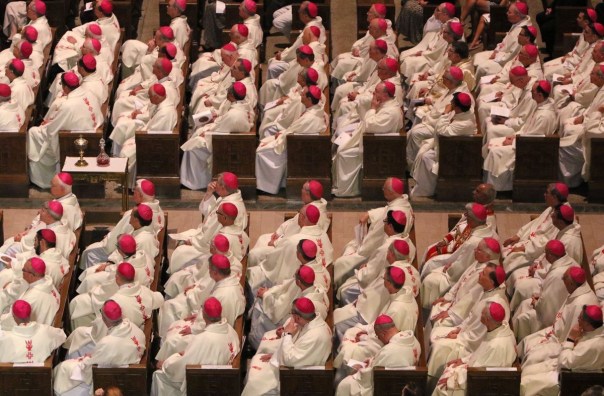
Regina Magazine recently asked their readers an interesting question about musical preferences for Mass. At their Facebook page the online magazine (whose slogan is Interesting. Intelligent. Catholic.) specifically polled those 35 years and younger, asking:
Do you like folk/rock music at Mass? Why or why not? What do you prefer?
Within the first few hours nearly two hundred comments were left. The responses were nearly unanimous and might surprise a few people.
One reader told Regina:
“Nope. I like folk and rock, but not at Mass. There’s better places to listen to that music than a church. Gimme Gregorian chant or polyphony any time.”
Another commenter said:
“No, please, no rock or folk. It’s not conducive to the conduct of the sacred liturgy, the forms don’t match the content, and often are bad examples of the genre by secular standards. I like chant propers (introit, etc.–as set for each mass by the missal itself!) with polyphony for the unchanging mass parts and the occasional motet. It seems to me the best reflection of what both forms of the mass require as laid down by the rubrics. I am 34, but have pretty much always felt this way.”
One commenter named Anna said:
“I ‘just’ turned 35… can I still answer??? Rock music, never liked it or thought it appropriate. Folk sounding music, there were a couple of songs that I liked…. But once I heard Sacred music, the Latin, the Chant…. I just can’t listen to anything else during Mass. Sacred music, has ruined anything else for me.”
A reader named Antonette responded by saying:
“24 year old answering- nope! I like the traditional choir and organ. I had a traditional mass wedding too. I don’t care for modernism in the Catholic Church- if people want modern and “cool” music, they can join a non denominational church. Mass isnt supposed to be a rock concert, it’s supposed to be a time of quiet prayer and traditional praise.”
And finally, a twenty-something reader named Ginnie captured the overwhelming tone of the comments by succinctly stating:
“Save it for concerts, the Mass is not a concert. And this is coming from someone who loves folk and rock of all kinds.”
Taking these responses into consideration, the question we should respectfully ask our bishops is this: Are you listening?
The young are hungry for tradition. They long for beauty. They are seeking beauty which is transcendent. They want the sacred restored.
Who is listening to their voices?
We do know that the Diocese of Marquette is responding. What started under (then) Bishop Alexander Sample in 2013, continues today under Bishop John Doerfler.
As I have written about before, Bishop Doerfler’s 2016 pastoral directive Instruction on Sacred Music in Divine Worship seeks to restore sacred music through several concrete directives:
- All parishes and schools will learn to chant the Ordinary parts of the Mass in English that are found in the Roman Missal, and they will be sung by the congregation some of the time throughout the year.
- All parishes and schools will learn to chant the KYRIE, SANCTUS and AGNUS DEI from the Missa lubilate Deo, and they will be sung by the congregation some of the time throughout the year.
- All parishes and schools will learn to chant the Communion Antiphon in English to a very simple tone that everyone can sing, and the Communion Antiphon will be sung at every Sunday Mass. A hymn may be sung after the Communion Antiphon while the congregation is receiving the Blessed Sacrament.
- A Diocesan Hymnal will be used to ensure the musical quality and doctrinal integrity of the Sacred Music. The hymnal will include a broad repertoire of hymns from classical to contemporary.
- The Diocesan Director of Sacred Music will provide annual, regional workshops for parish musicians to assist them in the implementation of these directives. He will also assist music teachers in Catholic schools to implement Sacred Music in the school curriculum and at school Masses. Finally, he stands at the service of parishes upon request to help implement Sacred Music in other ways.
However, restoring sacred music to its proper place within the Mass shouldn’t be unique just to Marquette. After all, it is simply the humble and faithful response of clergy and laity to Holy Mother Church.
From Pope St. Pius X’s 1903 Motu Proprio Tra le Sollecitudini to the Second Vatican Council’s Constitution on the Sacred Liturgy (Sacrosanctum Concilium), the liturgical movement of the twentieth century consistently sought to restore Gregorian Chant and Sacred Music to its rightful place (pride of place in the words of Vatican 2) in the Roman Rite.
In other words, it isn’t simply that young Catholics hunger for sacred music; the Church calls for it. Therefore, the obedient realization of the authentic liturgical movement of the last century (the one that can be traced back to the French Benedictines among others) should be occurring in every diocese, not just Marquette. Period.
Do not be afraid to share this information with your pastor and, more importantly, with your bishop. When the sensus fidelium reflects the consistent teaching of the Church, you know that the movement is authentic. Restore sacred music to the liturgy.
Dear bishops: Are you listening?
(Photo credit: Chris Lee/St. Louis Post-Dispatch)


 liturgy guy