Monthly Archives: December 2025
Has the Time Come for an Apostolic Visitation to Charlotte?
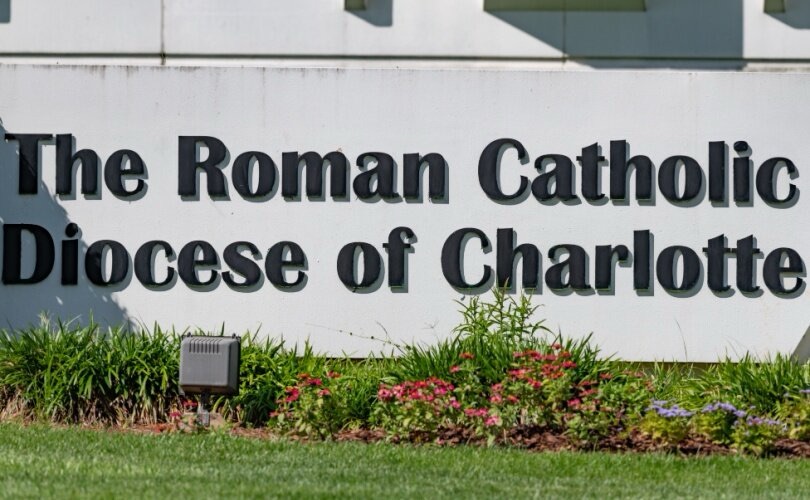
What does a new bishop do when he inherits a thriving diocese, one with beautiful, reverent, liturgies, engaged and intentional faithful, with vocations and ordinations booming? If you are Bishop Michael Martin of the Diocese of Charlotte the answer appears to be to “fix” everything that isn’t broken.
Just in the first 18 months since his installation as the fifth Bishop of Charlotte, Martin has repeatedly been in the news for his leadership style, haste in implementing changes, and overall incompatibility with the culture of the diocese.
What is most shocking and unsettling to many is Bishop Martin’s hyper-focus on what has been perceived (both inside and outside of the diocese) as Charlotte’s most noted achievements: reverent parish liturgies and booming vocations.
Earlier this year Martin made headlines for his decision to expel all remaining diocesan Latin Masses from their parishes, segregating all the TLM faithful to a single chapel hours away from their parish homes.
Despite the pleas of the faithful and the personal testimony of pastors as to the success and harmony of the two forms coexisting in their parishes, Bishop Martin refused to seek an additional dispensation from Rome.
To this day Bishop Martin has still not met with the traditional community nor visited the sparse, rural, chapel he exiled them to. In addition, hundreds of letters written by the faithful asking for reconsideration were replied to with a simple form letter response.
Recent reporting is now pointing to a style of governance that has been deeply problematic since his arrival in Charlotte. As reported by The Pillar:
One priest of the diocese called the bishop an “autocrat,” while another said he is “a bully” who has a reputation for berating his priests, going once on a lengthy tirade toward diocesan seminarians that left clergy frustrated.
Criticisms of that nature seem to reflect a growing morale problem among Charlotte clergy, which several priests said is causing them concern.
Many of the faithful have also lost confidence in Martin.
Back in May, a leaked draft of a proposed update to the diocesan liturgical norms demonstrated a plan to impose personal preferences upon all of the faithful and clergy, rather than recognizing the validity of more traditional or conservative practices which have become the culture of many parishes in the diocese.
It is clear reading the leaked proposal that Martin confuses uniformity for unity, believing that unity is realized only through the imposition of his liturgical preferences.
On the bishop’s agenda is apparently prohibitions against such valid and specific liturgical options as: singing parts of the Ordinary of the Mass in Latin, the use of traditional Latin hymns during Mass, the ringing of bells to signal the beginning of Mass, traditional Roman vestments, and even the use of altar candles and altar missal stand, just to name a few areas touched upon in his proposed norms.
Just this past week, as the faithful near the end of the Season of Advent, a time of hope and anticipation, Martin released a pastoral letter announcing a formal ban against the use of altar rails and kneelers for distributing Holy Communion. Although, as parts of his pastoral letter appear to contradict the laws of the Church and, in itself, lacks the force of law, it is unclear at this time how the faithful and clergy will respond.
Further demonstrating the rapidity at which changes are being implemented, at the same time as his pastoral letter was released the diocese also informed clergy via email of a change to the diocesan seminary formation program, requiring a pastoral year of teaching for each seminarian before they begin theological studies.
As I have reported in the past, the Diocese of Charlotte has ordained 13 men to the priesthood over the last two years, with another 12 set to be ordained in 2026. And yet, with less than two years in the diocese, Martin has decided to implement this new change to seminarian formation immediately with the upcoming academic year.
This pattern of micromanagement, mismanagement, and shattered morale among the clergy and faithful alike has resulted in a crisis of confidence in Martin’s leadership. As further noted in The Pillar:
“He’s receiving pushback, but he just moves forward anyways,” one priest said. “It doesn’t matter how much experience, expertise, planning or work has been put into something. He just has his own ideas, and he barks them and expects obedience.”
“He says that he consults, he says that it’s a consultative process, a central process or whatever, but he never changes anything,” another said…
And priests say the last two years have taken a toll. Clerical sources say they have become reflexively suspicious of new ideas because of their frustrations — and that lay people experience that in the diocese as well.
“My parishioners have expressed frustration and disappointment that the bishop would make and mandate so many changes without appearing to listen to the advice of the people around him,” a local priest told The Pillar. “I think it is pretty widespread that people are just frustrated.”
“Everybody is upset. It doesn’t matter — liberal, conservative, traditional, not so traditional, whatever. It’s a style of leadership issue,” another individual commented.
What is indisputable at this time is that there is a growing crisis in Charlotte; and it is a conspicuous crisis in leadership. Decisions are being made in Charlotte that have Catholics of all liturgical preferences and backgrounds around the world shaking their heads.
The problematic tenure of Bishop Martin is well known and highly documented. Is Rome paying attention? Has the time come for a visit?


 liturgy guy